Answering Service Vs Text Assistant For Plumbers
Why more plumbing businesses are ditching call centers for AI-powered text
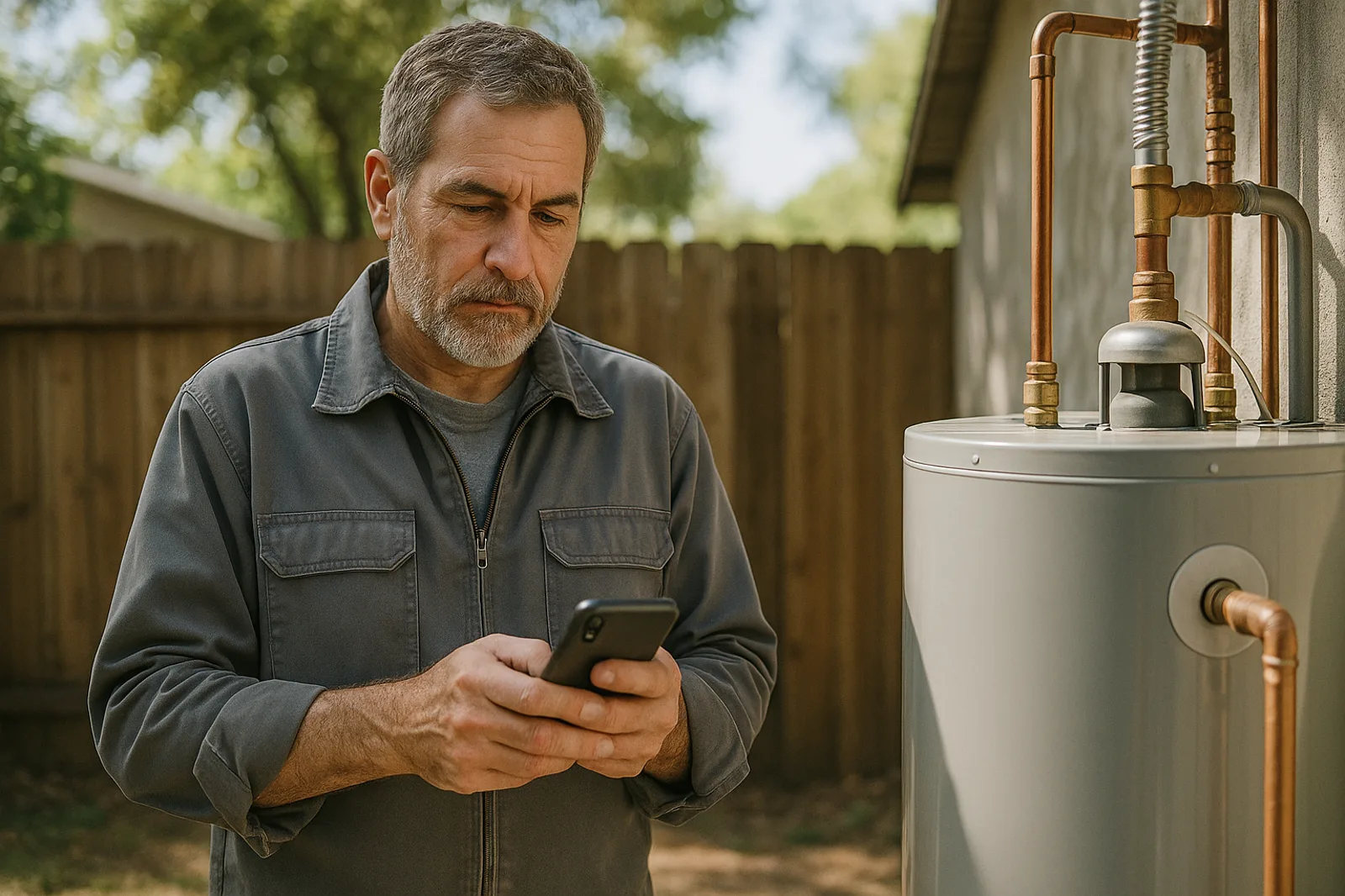
Your phone rings at 2 AM. A toilet's overflowing. Someone's ready to pay emergency rates. But you're asleep, and your answering service picks up — reads a script, takes a message, and promises a callback. By morning, that lead called three other plumbers.
That gap — between the call and the callback — is costing plumbing businesses millions in lost revenue every year. And it's the single biggest reason contractors are swapping traditional answering services for AI text assistants.
Here's the head-to-head comparison you actually need: answering service vs text assistant for plumbers, broken down by what matters — cost, speed, booking rates, and customer experience.
What a Traditional Answering Service Actually Does
Let's be fair upfront. Answering services have been the go-to for trades for decades, and they do serve a purpose. A live operator answers your line when you're on a job or off the clock. They take a message, maybe ask a few basic questions, and forward it to you via email or text.
But here's the reality most plumbers discover within six months:
1. They're expensive. Expect $75–$150+/month for basic plans, plus $1–$3 per call minute. A busy shop can easily hit $500–$1,000/month.
2. They miss context. The operator doesn't know plumbing. They can't tell a burst pipe from a slow drain — which means your callback prep is blind.
3. They don't book jobs. Most services are strictly message-taking. They leave the booking to you — which means you're still doing intake, just slightly delayed.
4. They lose details. Names get misspelled, addresses get swapped, and "the kitchen sink" becomes "the bathroom." You show up wrong or waste time calling back for clarifications.
None of this is malicious — it's just the limits of a model where a low-paid operator handles dozens of different businesses with zero trade-specific knowledge.
How AI Text Assistants Are Different
An AI text assistant like Prybar isn't a call center rep reading from a laminated script. It's purpose-built for trades — specifically for plumbing contractors who need to capture leads on autopilot while they're elbows-deep in a job.
Here's what changes when you switch:
Instant response. The average text assistant responds in seconds — not 5 minutes or 5 hours. When a homeowner texts "water all over the floor," they get a meaningful reply immediately, not an auto-reply saying "we'll get back to you."
Context-aware conversations. Because the AI is trained on plumbing (not general customer service), it understands the difference between a backed-up toilet and a slab leak. It asks the right follow-ups: Is the water still running? Is it clean or dirty water? Can you see the shutoff valve?
It books jobs, not just messages. This is the big one. While an answering service logs a callback request, a text assistant can check your calendar, offer available windows, and put a job on the board — all without you touching the phone. That means you wake up to jobs booked, not messages to return.
Side-by-Side: Cost Comparison
Let's put real numbers on this. A plumbing business handling 200 inbound after-hours calls per month:
| | Answering Service | AI Text Assistant |
|---|---|---|
| Monthly base | $100–$150 | $150–$300 |
| Per-minute charges | $1–$3/call min | None |
| Typical monthly total | $400–$900 | $150–$300 |
| Response time | 1–10 minutes avg | seconds |
| Books jobs? | Rarely | Yes, automatically |
| Plumbing-specific? | No | Yes |
The math is simple: an answering service costs 2–3x more for slower, lower-quality lead handling. And that's before you factor in the opportunity cost of missed or slow-to-close bookings.
Response Time Wins Jobs
Studies consistently show that the first contractor to respond converts the lead. In the trades, responding within 5 minutes increases close rates by over 300% compared to responses that take an hour or more.
Here's the typical timeline comparison for an after-hours emergency:
Answering service: Phone rings → operator picks up (30 sec) → takes message → emails you (1–5 min) → you wake up → you call back (variable). Total elapsed: hours.
Text assistant: Customer texts → AI responds in seconds → qualifies the lead → checks availability → books the time slot. Total elapsed: under 2 minutes.
The homeowner who texts at 3 AM doesn't need a callback at 7 AM. They need to know someone's coming — now. A text assistant gives them that certainty instantly.
Real Talk: What Plumbers Actually Prefer
You'd think customers would rather talk to a human. But here's what happens in practice — especially with younger homeowners:
Text is faster. Nobody wants to sit on hold or explain their emergency twice.
Text leaves a record. Addresses, descriptions, and promises are all right there in the conversation.
Text is less awkward. It's 2 AM. You don't want to wake up the customer's kids with a ringing phone.
Text converts better. Plumbers using Prybar's text assistant report 30–50% higher lead-to-booking conversion on after-hours calls compared to when they used a live answering service.
The customers who insist on calling? They can still call. A good text assistant forwards voicemails to the AI, which texts them back — bridging the gap without losing anyone.
What You Lose When You Switch
Let me be straight with you. Switching isn't all upside.
You lose the "warm body" factor — some older clients genuinely prefer hearing a human voice on the other end, even if that human can't actually help them. You also lose the natural-language flexibility of a real person who can improvise when a conversation goes off-script.
But here's the trade-off: for every one customer who insists on a live voice, there are twenty who prefer to text — and they're the ones booking the jobs while you're still returning messages from yesterday.
When To Keep Both
The smartest setup most growing plumbing businesses land on is hybrid: a text assistant handling the first touch and booking for the majority of leads, with a backup answering service or on-call staff for the niche cases where voice is non-negotiable (complex commercial quotes, insurance-required phone documentation, etc.).
That way you get 94% of leads handled instantly via text at a fraction of the cost, and the remaining 6% get the warm-and-fuzzy voice treatment they want. Best of both worlds.
The Bottom Line
The choice between an answering service and a text assistant for plumbers isn't really about technology — it's about speed. Customers who contact you after hours want one thing: to know you're coming and when. An answering service kicks that can down the road. A text assistant closes it.
If you're currently paying $500+/month for an answering service and still returning missed-call messages every morning, you're leaving money on the table. A trade-specific text assistant costs less, responds faster, and actually books jobs while you sleep.
Ready to see what your plumbing business could capture with a text assistant that knows the trade? [Start your free trial with Prybar](https://prybar.ai) and turn those 2 AM messages into booked jobs by morning.
Prybar helps trade businesses never miss a customer text again. Responds instantly, captures leads, books jobs — all while you work. Live in minutes.
Get Started →